


Captain of Space: Planet Quest
3.9116.00 Reviews
App Specs
- Version
- 6.1.0
- Updated On
- License
- Free
- Downloads
- 50,000+
- Developer
- Supercent, Inc.
- Categories
- Adventure
- Platform
- Android
Screenshots
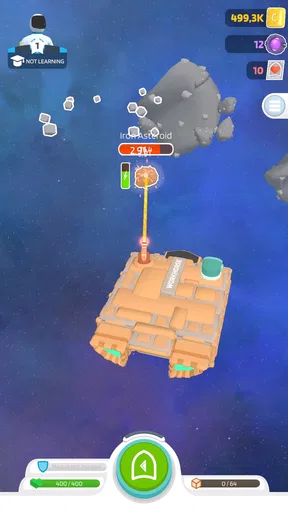
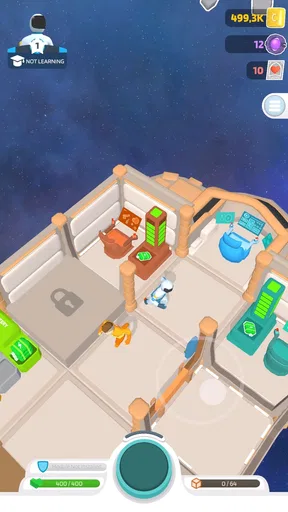
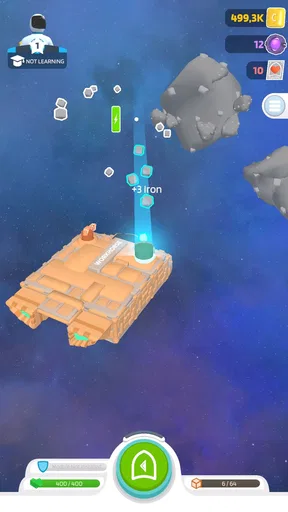
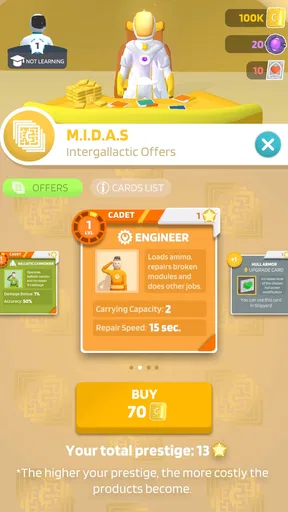
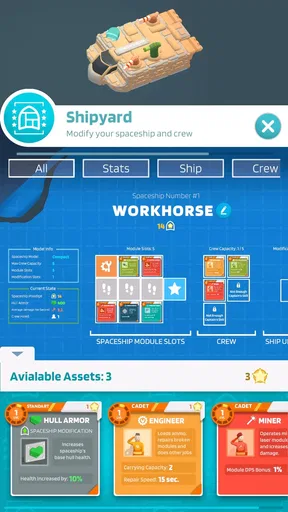
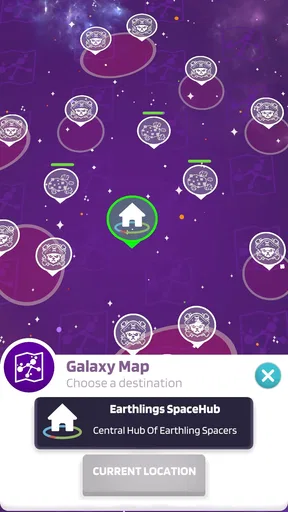
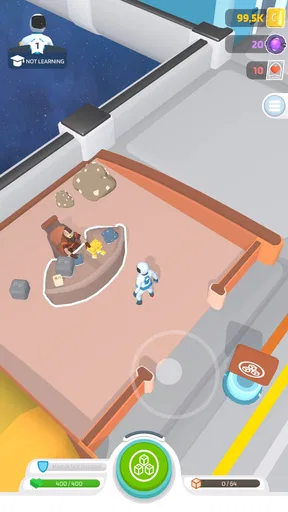
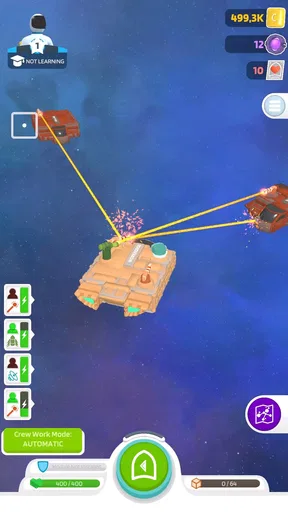
 Analysis by AppCompare
I went into Captain of Space: Planet Quest expecting a straightforward space-management game, and its appeal is exactly that modest promise: build up a mining operation, make progress among the stars, and enjoy a compact adventure rather than a sprawling space epic. The presentation points toward a light, approachable experience, while the mining-empire premise gives each stretch of play a clear purpose. I found it most appealing when I treated it as a casual game to dip into, not as a demanding simulation that needed my full attention.
A small-scale space adventure with a clear mood
I like how this game gives a brief phone break a modest sense of purpose: I can focus on the next step in a space-mining venture without needing to keep a sprawling story in mind. Its appeal depends on whether that measured, build-over-time mood suits you, so I’d try a short session before deciding if it earns a regular place on your home screen.
From the first launch, the goal is easy to grasp
Captain of Space: Planet Quest is an adventure game from Supercent, Inc., built around the fantasy of taking charge of a space-mining venture. That setup gives the game a useful sense of direction: the player is not simply wandering through space, but working toward an expanding operation. I like that as a starting point because it makes the theme understandable even if you are not usually drawn to complex management games.
The game is free to download, with optional in-app purchases priced from $0.99 to $49.99 per item. That range is worth keeping in mind before you start. A free entry point makes it easy to try, but the upper end of the purchase range is substantial enough that I would decide in advance whether I want to spend anything. I’d begin without buying, learn how the ordinary progression feels, and only then judge whether a purchase would improve my own experience.
Its audience is broad: the content rating is Everyone, and the game is listed for devices running Android 6.0 or later. The average rating is 3.8 from around 1.9 thousand ratings, with over 50 thousand installs. Those figures suggest a game with a real player base but not universal appeal. That fits my impression of a focused casual title: its premise can be inviting, though players looking for deep systems or constant action may want something else.
The practical question is whether this suits a short break. I’d say yes if you enjoy seeing a simple space-industry idea develop over time and don’t mind a measured pace. It is less compelling if your ideal adventure depends on a strong narrative, intricate tactical decisions, or precise action. The mining theme provides a frame for play, but it does not automatically make the experience a story-driven journey.
Planets and mining give the setting its identity
The strongest world-building idea is the contrast between a familiar business goal and an unusual setting. Mining is easy to understand; carrying that work across a galactic backdrop gives it a bit of escapist scale. The result feels more like a playful space enterprise than a hard-science expedition. I found that tone helpful: it lets the premise stay light instead of asking the player to learn a dense fictional universe before getting to the main activity.
Worth Reading Before You Choose

Flipboard Shows What News Apps Must Do Beyond the Feed

Switching to Android Auto Means Rethinking Your Driving Routine

Google Calendar Makes a Crowded Week Easier to Manage

Ludo King Makes the Most of the Minutes Between Plans

Baby Panda World Brings Quick Play to Modern Phones, but Its Game Library Feels Busy

ESPN’s Live Game View Makes Following Close Games Easier
Art direction matters especially in a game whose central fantasy is expansion. A space setting can quickly become visually interchangeable if every destination feels like another backdrop. Here, the most useful way to approach the presentation is to notice whether the art makes the mining-and-exploration idea readable at a glance. For a casual player, clarity is not a small thing: if the visual language makes the current goal feel obvious, it is easier to settle into a quick session without stopping to interpret every screen.
I would not mistake a galactic theme for an invitation to expect the breadth of a large exploration game. The setting is a mood and a framework for the mining premise, not a promise of an elaborate universe to study. That distinction is useful before downloading: if you want an atmospheric space diversion, the concept has a clear fit; if you want a richly written cosmos with elaborate lore, a narrative-focused science-fiction adventure is likely a better match.
One practical tip is to treat each session as a small check-in rather than expecting every visit to deliver a major discovery. That mindset suits an empire-building loop: you can focus on the immediate next step, enjoy the sense of gradual progress, and stop when you have had enough. It also makes the game easier to fit around ordinary routines, such as unwinding after work or filling a quiet wait, without demanding that you keep a long sequence of events in your head.
Let the pacing decide when to play
The rhythm is part of the appeal, but also the main taste test. A mining-focused simulator naturally invites a more deliberate cadence than an action game built around rapid encounters. I found that kind of pacing easiest to enjoy when I was relaxed and willing to let the broader project be the point. If I wanted immediate intensity, a fast arcade game would serve me better; if I wanted a low-pressure space theme, this was the more suitable choice.
That makes it a plausible everyday companion in a specific situation: imagine having a few minutes before an appointment, opening the game, checking on the space venture, and making a little progress before putting the phone away. It is a better fit for that sort of pause than for a commute where you need to react constantly or for a long session in which you expect a dramatic plot to unfold. I would still pay attention to how often the game asks me to return, since a relaxed pace can stop feeling relaxed if it becomes an obligation.
Sound and visual atmosphere can make an incremental loop feel more inviting, but they cannot replace satisfying decisions. I’d judge the audio by whether it supports the sense of being at the helm of a space operation without becoming tiring over repeated visits. For a game intended to work in short sessions, restraint matters: a mood that stays pleasant in the background is more valuable than a grand, noisy presentation that competes with everything else on the phone.
For the same reason, I’d try it with sound both on and muted rather than assuming one mode is best. If the audio gives the mining activity a stronger sense of place, headphones may make a quiet session feel more cohesive. If you are playing in a shared room or checking in briefly, muted play is often more convenient. This is not a claim about special audio settings; it is simply a practical way to decide whether the game’s atmosphere works for your habits.
Progression is most satisfying when kept in perspective
The mining-empire concept implies a progression loop, and that is where the game’s mechanical fit becomes important. The satisfying version of this loop is one where each visit leaves me with a clear sense of what I am working toward. The frustrating version is one where progress feels like waiting for its own sake. I recommend paying attention early to whether the next objective feels understandable and worthwhile to you, rather than pushing through purely because the theme sounds appealing.
A useful approach is to set a small personal stopping point before a session. Decide that you will make one meaningful improvement or spend a few minutes exploring the current stage, then close the game when that feels complete. This keeps a gradual simulator from swallowing time simply because there is always another step ahead. It also gives you a fairer sense of the pace: you can tell whether the game itself is enjoyable, rather than confusing a long session with a good one.
Compared with the usual alternatives in the adventure category, Captain of Space leans more toward managing a growing space operation than toward reflex-heavy combat or a tightly scripted quest. That difference is its clearest strength for the right player. Someone who enjoys incremental progress may prefer its focused premise over a more demanding action game. Someone who wants direct control, frequent surprises, or a substantial campaign will probably be better served by a conventional exploration adventure or a story-led science-fiction game.
The store name, Captain of Space, captures the broad role the game asks you to imagine, while Planet Quest points toward an outward-looking adventure. I would keep expectations anchored in the mining premise rather than assume that the word “quest” means a deep narrative campaign. That small distinction can prevent disappointment: the appeal is in the space-enterprise fantasy and its progression, not necessarily in a chain of dramatic story revelations.
Who will enjoy it—and who should pass
I’d recommend giving it a try if you like space settings, enjoy seeing a modest operation grow, and are comfortable with a game that may be better in brief, repeated visits than in one intense sitting. It could also suit someone who usually finds full-scale management games overwhelming but still likes the idea of building toward a larger goal. The approachable premise lowers the barrier to entry, while the free download means you can form your own opinion before deciding whether it deserves a place on your device.
I’d skip it if you mainly want fast combat, a strong cast of characters, detailed tactical choices, or a carefully plotted journey. A mining empire is a narrower fantasy than an all-purpose space adventure, and that focus may feel repetitive if the underlying progression does not hold your interest. It is also not the choice I’d make for someone who dislikes in-app purchases on principle: you can approach it without paying, but the available purchase range makes it sensible to keep spending boundaries in mind.
For a parent considering it, the Everyone age rating is reassuring as a broad content guide, though it is still worth checking the game personally and discussing purchases with a child. The same advice applies to any free-to-play game with optional spending: agree on a budget, or make clear that purchases need permission. That is a more practical safeguard than assuming a free download means there can be no later cost.
The version currently listed is 6.1.0, and the game was released on March 10, 2025. I mention those details because they help identify the edition you are considering, not because a version number tells you whether the mechanics will suit you. On a compatible device, the best test is still a short trial: see whether the space-mining loop feels satisfying, whether the presentation holds your attention, and whether you naturally want to return.
A recommendation for patient space builders
My overall impression is that Captain of Space: Planet Quest has a clear identity: it turns space into the setting for a gradual mining venture, with a casual-adventure feel rather than the weight of a serious strategy simulation. That clarity is valuable. It gives the game a recognizable mood and makes it easy to understand why someone might return for another short session.
Its limitations follow from the same focus. If steady expansion is not inherently satisfying to you, the premise may not provide enough variety to carry the experience. And while an inviting atmosphere can make routine progress pleasant, it cannot make every player enjoy a measured loop. I would judge it on whether the mining goal itself keeps you curious, not just whether the space theme looks appealing at first glance.
For me, this is a reasonable free download for someone who wants a low-pressure space game and likes the idea of building an operation over time. Try it in small doses, keep purchases deliberate, and compare its pace honestly with the action or story games you usually enjoy. If you finish a short session already wondering what you will improve next, it may be a good fit; if you are waiting for a different kind of adventure to begin, it probably is not the right one.
Pros
- Easy-to-understand controls make it approachable for casual players.
- Short levels suit quick play sessions.
- Space-themed visuals give the game a distinctive look.
- Progression provides goals to work toward between runs.
- A lightweight arcade format is well suited to mobile play.
Cons
- Gameplay may feel repetitive after extended sessions.
- Difficulty can become frustrating as challenges increase.
- Small mobile controls may take time to get used to.
- Progress may depend on repeated attempts at difficult stages.
- Ads or in-app purchases may interrupt the experience.
FAQs for Captain of Space: Planet Quest
What kind of game is Captain of Space: Planet Quest?
Captain of Space: Planet Quest is a space-themed game centered on exploring planets and completing quests. Its setting and progression are aimed at players who enjoy science-fiction adventures and discovering new locations. Before downloading, check the store listing for the current description and screenshots, since they provide the clearest indication of the gameplay style and features available in the version offered for your device.
Is Captain of Space: Planet Quest free to download and play?
The price and payment options can vary by platform, region, and version. Check the Google Play or Apple App Store listing to see whether the game is free to install, includes optional in-app purchases, or requires an upfront payment. A free download does not necessarily mean every item or feature is free, so review the listing and any purchase prompts before spending money.
Can I play Captain of Space: Planet Quest offline?
Offline availability depends on how the game handles quests, saved progress, and any online features. The store description may specify whether an internet connection is required, but requirements can also change after updates. If you plan to play while travelling or without reliable connectivity, check the latest listing and test the game’s offline behavior before relying on it; online features may not work without a connection.
Which phones and tablets are compatible with Captain of Space: Planet Quest?
Compatibility depends on your device’s operating system, hardware, and available storage, and requirements may differ between Android and iOS. Before downloading, compare your device with the minimum version and other requirements shown on its official store page. Also make sure you have enough free space for installation and updates. If the game is unavailable in your store, it may not be supported in your region or on your device.
Does Captain of Space: Planet Quest contain ads or collect personal information?
Ads, analytics, and data collection practices can vary by release and platform, so consult the game’s current store listing and linked privacy policy before installing. The policy should explain what information may be collected and how it is used; the store page may also disclose advertising or in-app purchases. If privacy is a priority, review requested permissions and avoid providing personal details unless they are necessary for a feature you choose to use.


